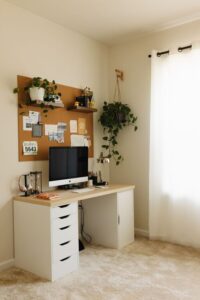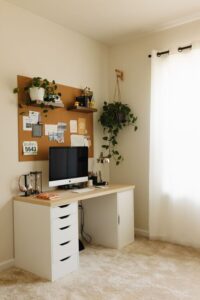
Tips for Creating a Relaxing Home Office Environment
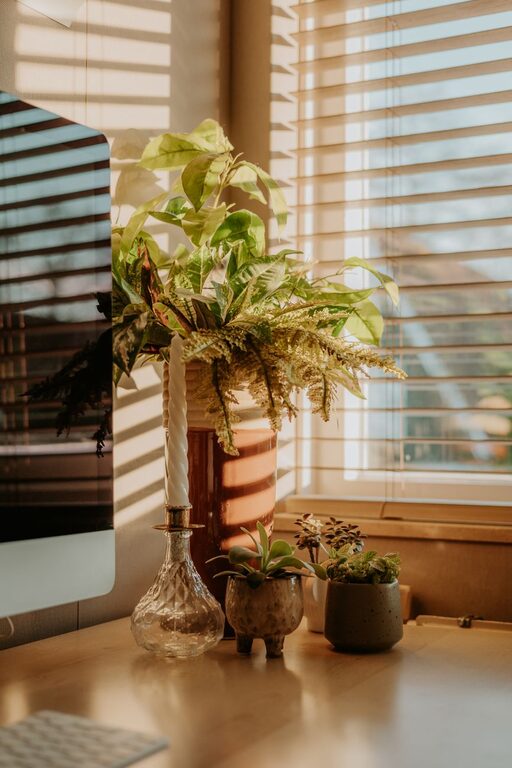
Creating a relaxing home office environment is essential for maintaining productivity and well-being, especially when many people are spending more time working from home. A calm and comfortable workspace can reduce stress, boost focus, and inspire creativity. Whether you have a dedicated room or just a small corner for your office, these tips will help you design a space that promotes relaxation and efficiency.
1. Choose the Right Location
Selecting the best spot for your home office is the first step in creating a relaxing environment.
– Natural Light: Position your desk near a window to take advantage of natural light. Sunlight improves mood and reduces eye strain.
– Quiet Area: Pick a location away from high-traffic or noisy parts of the house to minimize distractions.
– Space Considerations: Ensure you have enough room to comfortably fit your desk, chair, and storage without feeling cramped.
2. Invest in Comfortable Furniture
Comfort is key for long hours spent working.
– Ergonomic Chair: A supportive chair with adjustable height and lumbar support helps maintain good posture and prevent back pain.
– Desk Size: Choose a desk that accommodates your essentials but doesn’t overcrowd your space.
– Standing Options: Consider a sit-stand desk or an adjustable desk converter to switch positions throughout the day.
3. Use Soothing Colors and Décor
Colors influence mood and productivity.
– Calming Colors: Soft blues, greens, or neutral tones create a tranquil atmosphere.
– Personal Touches: Add plants, artwork, or meaningful objects that inspire positivity without cluttering your desk.
– Minimalism: Avoid excessive décor; a clean and tidy space promotes calmness.
4. Organize Efficiently
An organized workspace reduces stress and saves time.
– Declutter: Remove unnecessary items from your desk daily.
– Storage Solutions: Use shelves, drawers, or storage boxes to keep supplies neatly out of sight.
– Cable Management: Use clips or sleeves to organize cords and reduce visual distractions.
5. Control Lighting
Proper lighting prevents eye strain and creates a soothing environment.
– Task Lighting: Use adjustable desk lamps for focused work.
– Ambient Lighting: Soft overhead lights or floor lamps maintain a warm and inviting atmosphere.
– Screen Position: Position your computer screen to avoid glare from windows or lights.
6. Incorporate Plants and Natural Elements
Plants and nature bring life to your space and reduce stress.
– Air-Purifying Plants: Options like snake plants, pothos, or peace lilies improve air quality.
– Natural Materials: Wood desks or stone accessories add grounding elements to your office.
– Essential Oils: Consider gentle scents like lavender or eucalyptus with a diffuser for relaxation.
7. Manage Noise Levels
Sound impacts concentration and relaxation.
– White Noise: Use a white noise machine or calming background music to block distracting sounds.
– Noise-Cancelling Headphones: Helpful for noisy households or shared spaces.
– Soundproofing: Add rugs, curtains, or wall panels to dampen sound if needed.
8. Set Clear Boundaries
Maintaining work-life balance starts with your workspace.
– Separate Work and Relax Areas: If possible, use a door or divider to create distinction.
– Office Hours: Stick to work schedules to avoid burnout and help your mind relax after work.
– End-of-Day Routine: Clean your desk and organize for the next day to signal the workday’s end.
9. Personalize for Comfort
Make your home office a place you enjoy spending time.
– Comfort Accessories: Use a cozy blanket, cushion, or footrest.
– Healthy Snacks and Water: Keep a water bottle and nutritious snacks nearby.
– Break Space: If space allows, add a comfy chair or small sofa for breaks.
Final Thoughts
A relaxing home office environment is within your reach with thoughtful planning and simple adjustments. By focusing on comfort, organization, lighting, and personalization, you can create a space that supports productivity and well-being. Remember, your workspace should reflect your needs and preferences—making it a place where you feel calm, focused, and inspired throughout your workday.